
Polishing of Alumina Ceramic Gears by Picosecond Pulsed Laser
DOI:
https://doi.org/10.5545/sv-jme.2025.1449Keywords:
Alumina ceramics, Ceramic gears, Picosecond pulsed laser, Surface partitioning, Laser polishingAbstract
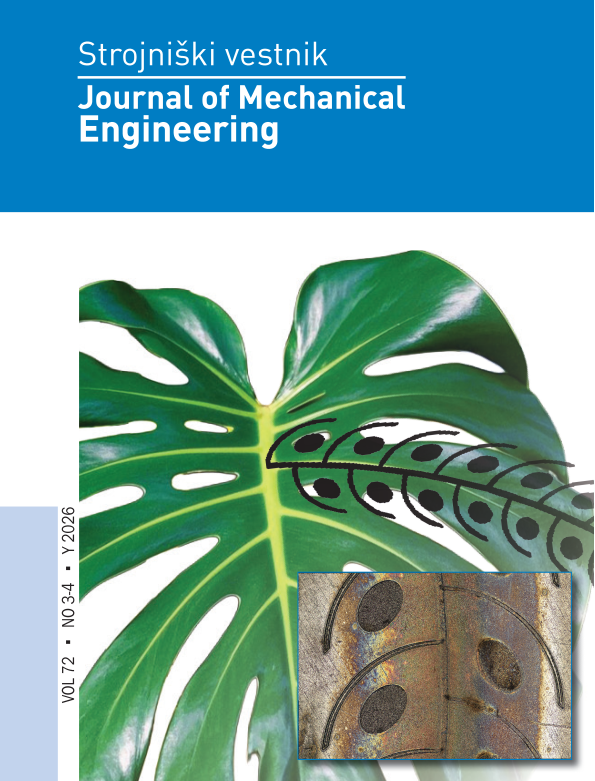
Alumina ceramic gears exhibit excellent mechanical properties as well as resistance to high temperatures and corrosion, making them suitable for extreme working conditions that traditional metal gears cannot accommodate. However, their inherent high hardness and brittleness present significant challenges in ensuring high-quality surfaces during molding and manufacturing. In this study, alumina ceramic gears were polished using a picosecond pulsed laser. By proposing a novel alternating superimposed scanning strategy, processing errors were effectively reduced, and surface integrity was enhanced. A univariate experimental approach was used to optimize the key laser processing parameters, including laser power, scanning speed, number of scans, and line spacing. The optimal combination of parameters (7 W power, 220 mm/s scanning speed, 4 scans, and 0.005 mm line spacing) was finally determined to obtain a tooth surface with a surface roughness (Sa) of 1.091 μm (±0.025 μm). Comparative analysis showed that the surface roughness was significantly reduced by 41.93 % to 44.53 % compared with the conventional machining (1.922 μm). In addition, the microhardness of the laser-treated tooth surface increased by 6.36 % and showed improved resistance to tooth chipping under localized high-load conditions. The enhanced surface flatness and mechanical properties significantly improve the meshing performance required for mechanical transmission systems. Notably, the laser surface treatment method significantly reduces the processing cost compared with the traditional mechanical polishing process, providing a cost-effective alternative for ceramic gear molding surface treatment process. This paper innovatively applies laser polishing directly to the tooth surfaces of actual ceramic gears featuring complex curved surfaces, thereby providing crucial process support for their practical application in high-precision transmission systems.
Downloads
Additional Files
Published
How to Cite
Issue
Section
License
Copyright (c) 2026 The Authors

This work is licensed under a Creative Commons Attribution 4.0 International License.