
Dynamic Modeling and Simulation Analysis of Wet Friction Clutch Considering Warping Friction Pair
DOI:
https://doi.org/10.5545/sv-jme.2025.1523Keywords:
wet friction clutch, warpage of steel plate, engagement characteristics, dynamic modeling, simulation analysisAbstract
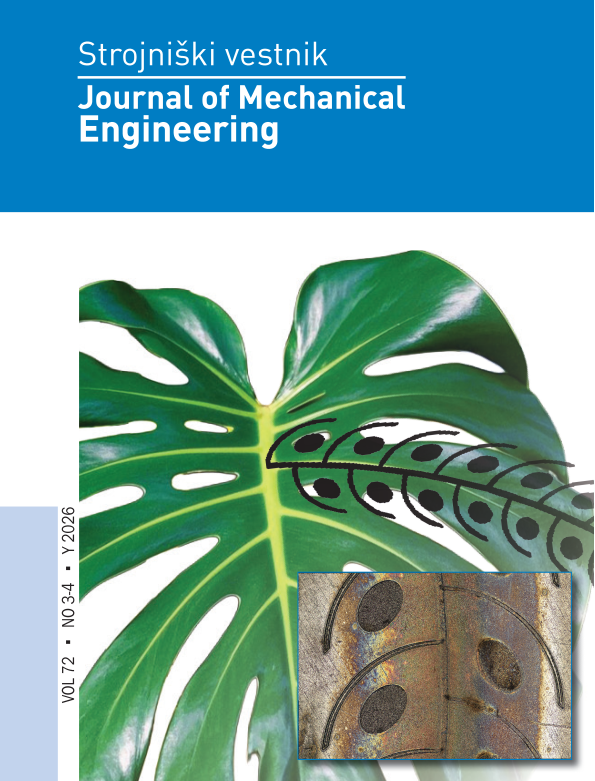
As a critical component of helicopter variable-speed transmission systems, the wet clutch directly influences transmission stability; consequently, clutch plate warping is a primary cause of operational malfunctions. This study investigates the engagement characteristics of warped friction pairs by developing an inter-plate load-carrying capacity model. This model integrates geometric, flow field, and microscopic contact characteristics, alongside the force-displacement properties of the separation spring and warped plates. Through the coupling of axial and circumferential motions, key parameters, including inter-plate bearing capacity and transmitted torque, are quantitatively determined. The results indicate that the engagement process of a warped friction pair consists exclusively of squeeze and mixed friction phases, which correspond to the non-contact, deformation, and plastic stages of the steel plate. During the squeeze phase, the piston pressure is balanced solely by the hydrodynamic pressure of the oil film, whereas in the mixed friction phase, it is supported by a combination of oil film pressure and micro-asperity contact forces. Furthermore, friction pair type 2 exhibits slightly lower torque transmission due to spline frictional resistance. Engagement tests conducted using an MM6000 tester validate the reliability of the proposed model, demonstrating engagement time errors of less than 8.5 %.
Downloads
Additional Files
Published
How to Cite
Issue
Section
License
Copyright (c) 2026 The Authors

This work is licensed under a Creative Commons Attribution 4.0 International License.